
Maintenance and risk management are two sides of the same coin. The PG&E case demonstrates this unequivocally : when maintenance is neglected, risk does not disappear. It accumulates. Silently. Until it becomes irreversible.
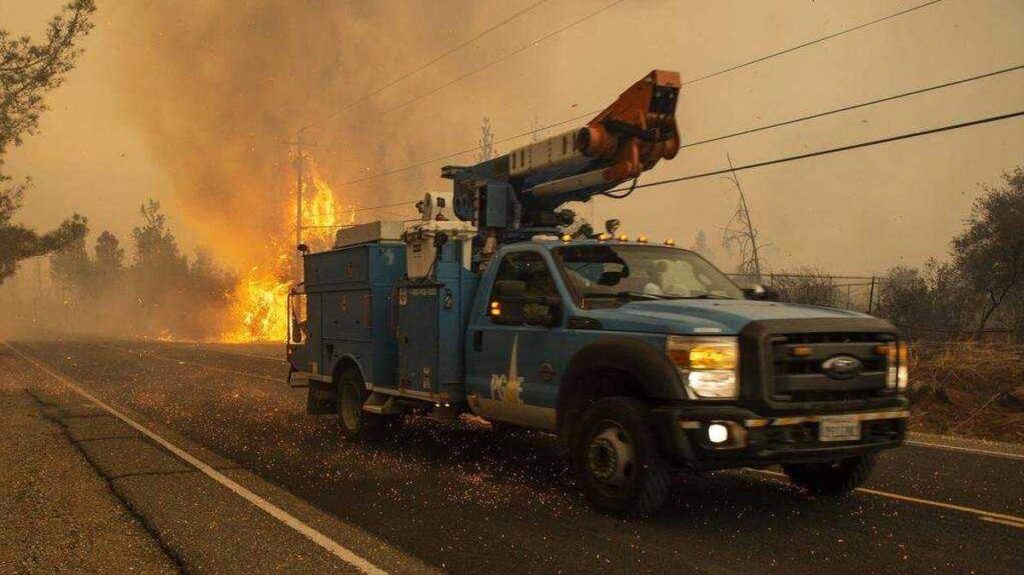
A century-old company, a fatal mistake
Pacific Gas and Electric Company — PG&E — is one of the largest energy companies in the United States. Founded in 1905, it supplied millions of Californians with electricity and natural gas. Yet in January 2019, it filed for bankruptcy. Not due to a lack of customers. Not because of a market collapse. Because of a non-existent maintenance programme.
What happened
Between 2015 and 2018, PG&E’s electrical infrastructure caused a series of devastating wildfires in California. The most severe — the “Camp Fire” of November 2018 — destroyed the town of Paradise, causing 85 deaths and burning more than 18,000 buildings. It was the deadliest wildfire in California’s history.
Investigations established clear responsibility: PG&E did not have an effective inspection and maintenance programme for its power lines. Worn cables, obsolete infrastructure, skipped checks. The risk signals existed. They were documented. And they were ignored for years.
The cost of inaction
Crushed by compensation claims estimated at around 30 billion dollars, PG&E filed for bankruptcy in January 2019 — becoming the first case in American history of a company held criminally responsible for a wildfire.
The cost of the preventive maintenance that was never carried out? A fraction of that figure.
The lesson for every company
The PG&E case does not only concern the energy sector. It concerns every organisation that manages infrastructure, machinery or facilities.
Maintenance is not an operational cost to optimise. It is a safety barrier. When it is neglected — for economic, organisational reasons or simply out of habit — risk accumulates silently. Until the breaking point.
A skipped inspection is not a saving. It is a risk transferred to the future.
Conclusion
PG&E had the means, the resources and the expertise to prevent these disasters. What was missing was a culture of maintenance as a risk management tool — not as a cost line to be reduced.
Prevention is invisible when it works. It only becomes visible when it was never there.