
The operational risk linked to extreme heat is one of the most underestimated occupational risks. Yet every summer, heatwaves put thousands of workers in danger — on construction sites, in warehouses, in fields, in factories. This is not a question of bad luck. It is a question of prevention.
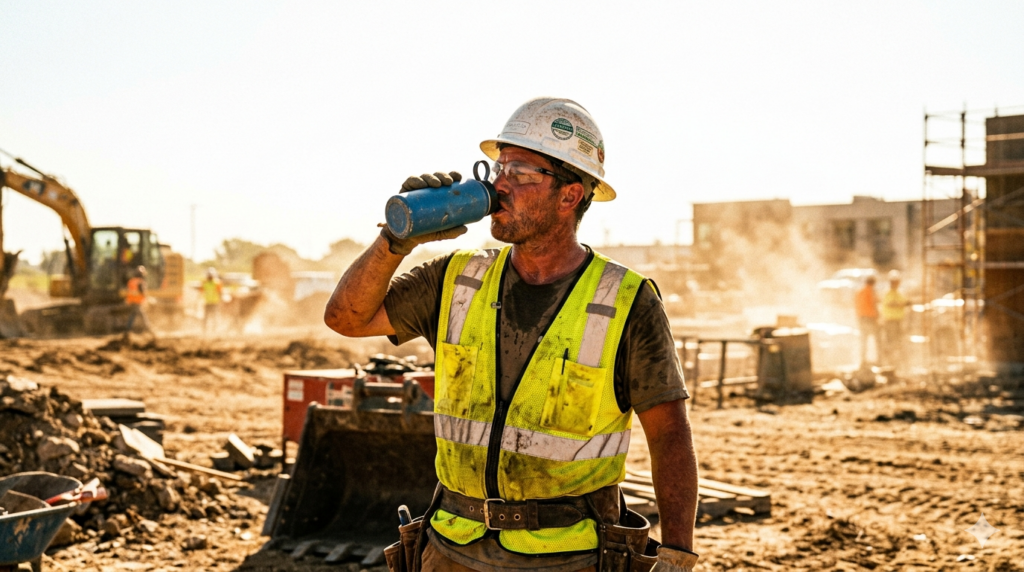
Why heat is a real operational risk
High temperatures are not just an inconvenience. They directly affect the physical and cognitive capacities of workers.
When body temperature exceeds physiological limits, the body begins to send signals: early fatigue, loss of concentration, slower reflexes. In a work environment, these effects translate into human errors, accidents and injuries.
In Europe, studies confirm that workplace accidents increase significantly during heatwaves. Workers exposed to high temperatures for prolonged periods are among those most at risk — particularly those working outdoors, in non-air-conditioned environments or near industrial heat sources.
The most vulnerable workers
Not all workers face the same risk. Some categories are particularly vulnerable.
Construction workers and agricultural workers, directly exposed to the sun for many hours. New employees, whose bodies are not yet acclimatised to summer working conditions. Older workers and those suffering from chronic conditions, for whom heat stress can have more serious consequences. Finally, those taking certain medications that interfere with body temperature regulation.
How to recognise warning signs
Prevention starts with recognising symptoms. The main signs of heat stress are:
— Sudden fatigue disproportionate to the effort
— Persistent headaches
— Nausea and dizziness
— Mental confusion and difficulty concentrating
— Muscle cramps
— Red, hot and dry skin
When one or more of these signals appear, immediate action is required. Stop-Work is not a weakness. It is a choice of responsibility.
5 concrete measures to protect workers
1. Adapt working hours
On the hottest days, plan the most physically demanding activities in the early morning or late afternoon, avoiding the most critical time slots between 12pm and 4pm.
2. Ensure adequate hydration
In conditions of intense heat, water requirements increase significantly. The general rule is to drink approximately one litre of water per hour of outdoor work — without waiting for the sensation of thirst, which always arrives too late.
3. Organise regular breaks in cool places
Breaks are not optional. They are safety measures. Every worker exposed to heat must have access to shaded areas or cool environments where they can recover.
4. Train and raise awareness across the entire team
Workers must know the risks, recognise the symptoms and know how to intervene — both for themselves and for their colleagues. Training on heat risk must be an integral part of the company’s HSE programme.
5. Document and report every episode
Every episode of heat-related discomfort — even mild — must be recorded and analysed. Incident traceability is the foundation for improving procedures and preventing future episodes.
The regulatory framework
In the United Kingdom and across Europe, employers are required to assess all risks to the health and safety of workers — including the risk of heat stress. During extreme heatwaves, companies can implement temporary work suspensions for the most dangerous activities.
Knowing and applying these provisions is not just a legal obligation. It is a responsibility towards people.
Conclusion
Extreme heat is not inevitable. It is a foreseeable, measurable and manageable risk — like all other operational risks.
Adapting schedules, ensuring hydration, training the team, documenting episodes. These are simple actions. But they make the difference between a worker who goes home healthy and one who does not.